

When we talk about consumer behaviour, most people tend to overlook the fact that this field extends online. Upon designing an app or even a website, it’s essential that consumers or “users” are kept in mind throughout the whole process.
The entire customer experience must be managed across all online and offline touch-points to ensure a seamless user experience. This allows for improving brand consistency and for managing brand perceptions in the consumers’ minds.
Web designers should adopt the humane aspect of user experience (UX) which allows to fully understanding the customers and their motivations to proceed with the website accordingly. By doing so, it will help to extend the brand’s essence online and to achieve synergy across various platforms.
Function vs Aesthetics
When thinking of a website design, many tend to visualise the style which often includes the images, the information placement, and the colours. However, the UX extends beyond the aesthetics of the website to its overall function and usage.
There are several important factors that must be achieved when creating a convenient UX. But before even sketching a website’s blueprint, designers must ensure that they have a good understanding of their customers. They should understand their customer’s interests, online behaviour, favourite type of websites or content, habits, and their action drivers.
All of these factors help to achieve an infrastructure to build the website on as well as it helps to establish a consistent brand identity & brand familiarity in the consumer’s minds.
The UX factors of success
After understanding the customers fully, there come the important factors which should be present throughout any website development process. These factors include; usability, accessibility, credibility, find-ability and usefulness. These factors come at play to enhance the website’s experience for all the users.
To begin with, the website must be very easy to use. Believe it or not, but people don’t really like things that makes them think a lot, so the easier a website is to use, the better. The other face of the coin of usability is accessibility. Having a website available for everyone’s usage is crucial.
After all, inclusiveness is really important and no one should be left out in the designing process.
Another success factor for a website is credibility. A website should be legitimate so users can also trust it with their information. It is also important for the website to be found easily in the search results.
Lastly, the website should add value for the users in exchange for the time spent on the website.
By including all of these factors, it is likely to deliver a pleasant experience and to have the users spend more time on the web and even, engage with your content.
The Worth of a Click
When designing a website, each and every small detail matters. A small change in an icon or a word could make a huge impact and achieve big results. For example, changing the colour of a cart or perhaps, changing the word cart on a website into a cart icon might increase clicks and purchases.
Have you heard of Amazon’s $300 million dollar button?

Amazon managed to gain a $300 million worth of sales by simply changing their “Register” button to “Continue”. The reason for this button’s success is due to the fact that “Continue” carried a different set of associations. Most people perceive continue as something natural and does not require an extra effort, so they were more likely to click on it.
The key idea here is that sometimes, you actually have to test a feature to know its effectiveness.
The Meaning Behind Your Click
On websites, analysing clicks is really important for every click or any part that’s not being clicked gives actionable insights. Some websites have tracking tools or heat maps to detect which parts of the websites gets a lot of clicks and which parts don’t.
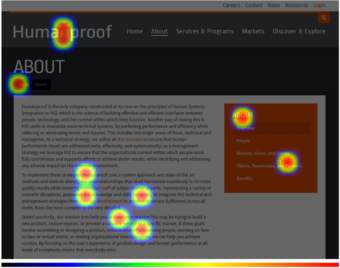
By doing so, they’ll gain a deeper understanding on what to improve and on how to place different items on their website. This might actually help to deliver desirable actions from the customers and to drive better results.
Checking Out
Every section of the website matters. It is important for the whole process of browsing or purchasing to be smooth. That being said, the checkout page must be very simple.
Having a checkout page that demands a lot of things is likely to drive the prospects out of your website and perhaps, never on it ever again. (Remember the Amazon example?). A one-page checkout page is likely to enhance the customer’s experience and to increase the amount of sales.
CLV Boost
By delivering a convenient UX, it can certainly increase the customers’ loyalty and increase their purchases. This, in turn, will result in increasing the customers’ lifetime value (CLV). The customers will be more likely to purchase more and thus, become of a higher worth for the company. A convenient browsing and a checkout process might also increase the chances of impulse buying as well.
The Other View on UX
Although UX is still perceived by designers as something too technical which results in overlooking the humane aspect, it is essential to put the customers at the core of any UX design. After all, you wouldn’t want to design a perfect website for nobody to use or to benefit from. It is important to add a more “humane” perspective and approach to the process.
Although there are plenty of additional factors which should be considered to enhance the overall UX, the ones mentioned would help give a head start.
By offering the customers a consistent brand experience across various platforms, it might increase the chances of turning loyal customers into advocates who are willing to recommend your brand for others later on.
At the end of the day, isn’t the ideal goal of digital platforms to transform loyalty into advocacy?
 BBB- Buyer's Black Box