Cultural products carry symbolic meanings which resemble national identities around the world. How has the digital world affected cultural products and what they resemble?
Have such products lost their unique resemblance in the digital world? Or has the digital world enabled cultural products to evolve and reach new boundaries?
Whenever we hear the word “tribe”, our brains get immediately redirected to an image of a group of people or cavemen in the early civilization living together and fighting for their own survival. Rarely do we think that tribes are all around us and that we happen to be members of not one, but numerous tribes.
If you come to think of it, every single aspect of your own being automatically grants you a membership to a specific tribe. It could be your gender, age, or even your favorite football club.
What’s your favorite football club?
Tribes As Our Safe Zone
When things go bad or in a way in which we don’t want them to, we as humans, tend to resort to our tribe or our “safe zone”. Something about “tribes” makes us feel like we truly belong.
So, what is a “Tribe”?
“A tribe is a group of people connected to one another, connected to a leader, and connected to an idea”
– Seth Godin
A tribe is usually a group of people whom we identify with, it extends beyond common demographic attributes to entail collective goals, values, or set of beliefs. Humans normally belong to more than just one tribe where every tribe has different characteristics than the other.
Tribe members often share a similar or a common lifestyle, values, mindset, interests, or experience. Their presence extends throughout countries, cultures, generations, online communities, or even brands.
The Last of Tribes: Defending Brands & Getting a Harley Davidson Tattoo
Consider how your hobbies or the things you love to do the most in leisure make you a tribe member where you share common views with different people about the same product or brand. For instance, as a gamer, you would either belong to the “PlayStation” tribe or the “Xbox” clan.
Such belonging even comes with a strong sense of entitlement which entails defending the brand aggressively against its competitors and becoming a brand’s advocate.
In many cases, brands take advantage of tribes and try to infuse their efforts with “tribal marketing” where their consumers are identified as a group with collective views and common interests around their offering.
Brands tend to create content or to position themselves in a way that resembles or targets the tribe so that the consumers associate themselves with the brand and its products.
Harley Davidson happens to be one of the brands in which its consumers are members of a tribe who share the same or a similar lifestyle.
Some consumers are so devoted to the HD brand to the point of getting its logo tattooed on their body. The tattoo is later shown as a “badge” or a token of pride to convey belonging and identification with the HD brand itself.
– Turning Humans Into Walking Billboards
You Are What You Watch Or… Listen To
The possibilities of belonging to tribes are endless, even your favorite series or music genre could give you a tribe access. Think about it, are you a Star Wars fan or a Star Trek’s?, a Potter head or a LOTR’s? A Metallica or a BTS fan? (there’s no middle ground – you’re either this or that)
I “Do” Therefore, I Am
In today’s world, consumers no longer define themselves by their demographics but rather, by their actions. Some acts get adopted just for the sake of fitting into a certain brand group or “tribe” which later gets transformed into brand habits or a lifestyle.
By taking certain purchasing decisions, the consumers’ identity and behavior gets re-shaped.
We tend to believe that our actions define us and that we get to control them, but truth be told, that’s not always the case. It is possible for brands to dictate our behavior for us (remember brand rituals?) and to make us perform some acts which translate into a new identity later on and make us a true member of their brand’s tribe.
Moreover, some consumers tend to change their consumption patterns as a mean of fitting into a specific brand’s tribe. Products then become a communication method or a marker of a social image the consumers are trying to replicate.
This is often seen in the car industry where sports cars are marketed towards not the youngsters, but the older generation who are trying to reflect a specific image to the society.
Digital Tribalism
Nowadays, the tribes’ presence has extended to digital platforms. People or consumers can join forums, groups, or pages of the tribes that resemble their beliefs. The need to fit in has turned online which allows brands to reach and access their consumer base easier and to foster better communication with them.
Technology has made it way easier for tribes to connect, exchange knowledge with one another, and to share their common interests.
Surrounding yourself with people you identify with allows algorithms to deliver content that resonate with your tribe’s ideology which later reinforces and amplifies your current beliefs.
When it comes to marketing efforts, targeting tribes makes it easier for brands to understand their consumers and to connect with them on different emotional and cognitive levels.
It is more efficient than merely targeting crowds, and it transcends the brand’s USP to an Emotional Selling Proposition (ESP) where consumers associate themselves deeply with the brand’s offerings and are emotionally triggered and prompted to act accordingly.
Targeting or leading a brand’s cult or groups who share similar brand notions can trigger online conversations within their online communities and enhance word of mouth marketing. It can also ensure loyalty to the brand and promote value creation within it.
However, it is important that brands understand their tribes before targeting them and to realize that for consumers, it could be more about connecting with the tribe than with the brand itself.
Brands should always listen to their tribes and facilitate their conversations and interactions which could be done via creating relevant experiences for them.
Other Tribal Methods
In tribal marketing, some brands infuse it within their advertising messages, digital strategies, or other campaigns and strategies.
Instead of promoting a product to their target audience, brands represent themselves as a platform where their tribal communities could engage with them and share their stories or experiences.
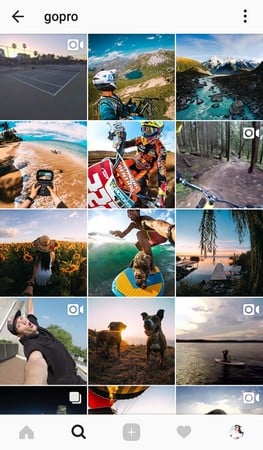
This is prevalent, for instance, with GoPro where it provides a platform to share its user-generated content.
Conclusion
When it comes to tribes, it is essential for brands to sometimes take a backseat and watch their community take the lead in creating value relevant to the brand’s mission and values.
At some point, tribalism can shift brands into a platform where the brand’s mission becomes evident in the contributions of their users.
It is important for brands to remain true to their values. Such authenticity should be consistently and constantly communicated in their various marketing efforts to develop deeper connections and build tribes which extends their value and communicate it across generations.
Tribal marketing might not be suitable for every product out there but if a company is able to use it for one of its products, it will definitely do wonders.
“Have you heard of the new place in town? Everyone is talking about it!”
Surely, you have been approached by someone saying this at some point in your life. Every day, we encounter millions of advertisements, but unknowingly, some of these ads could be run by our peers or friends around us.
Whenever you hear a recommendation about a brand or an organisation from a consumer, this is a form of “word of mouth” marketing or WOMM. Word of mouth marketing is a form of free advertising which could either be organic or spontaneously encouraged by companies.
Consumers have a tendency to recommend a brand when their experience exceeds their expectations. These types of consumers who are willing to advocate for a brand could be identified through various means. Such means could include the simple “Net Promoter Score Method” where advocates are likely to be the ones who vote 9-10 on the scale.
Net Promoter Score Method
WOM happens to be a very powerful marketing tool which affects the consumers’ purchasing decisions and brand perceptions. Based on a NielsenStudy, friends and family recommendations are trusted more than other forms of advertising by 92% of people.
It is perceived by consumers as a form of trusted advertising since it comes from people they already know or can easily identify with.
Companies might also refer to influencers or opinion leaders on a local level to promote their brand and advocate for it. This type of advertising could be achieved through the brand’s offering and value proposition.
Encouraging it could also entail offering the consumers an exceptional customer service or exclusive offers and personalised items depending on the brand’s identity.
Some companies tend to encourage WOMM through investing in various initiatives. They set up brand ambassadors schemes and tryvertising which involve groups of people who actually try the products and spread the word which later affects the consumers’ behavioural intentions.
In the digital era, WOMM has gone online. Brands have been creating triggers and shareable content to encourage their audience to interact and initiate conversations online. This allows increasing the brands’ associations and memorability. In addition, marketers tend to create campaigns which boost the word of mouth within online communities.
Some brands create blogs or forums to encourage discussions related to their products.
Some companies and brands combine this type of marketing with referral marketing. They do so by seeking social media influencers to extend their conversation or advertising online. They even have programs tailored specifically for them. The latter include special coupon codes or landing pages which benefits both of the company and the influencer simultaneously.
Companies like Amazon have special referral programs where regular consumers act as affiliates and are rewarded with commission based on their performance. In addition, some brands like Nike utilise their values as part of their cause marketing which increases controversies and place the brand itself as an advocate.
Word of mouth marketing is very beneficial especially when establishing a brand. It helps generate awareness and build deeper interactions with the audience for it provides them with shareable resources.
When used effectively, it could also save up a lot of costs since this type of marketing has the potential for viral or exponential growth. It occurs in the form of “earned” media which results in more people trusting it and acting upon it.
In addition, WOM marketing allows the consumers to feel closer to the brand which might result in the change of their beliefs, evaluation, and their attitude about the brand later on.
It could generate positive feelings towards the involved brand. Also, this form of marketing helps boosts the consumers’ loyalty and advocacy which later translates into high customer’s lifetime value.
Although it helps in enhancing the brand’s awareness, WOMM’s effects aren’t guaranteed to be positive. The key problem lies in the fact that the word that gets out is not yours.
This creates a problem for it prevents brands to control the conversation. If negative words outnumber the positive ones then, this could be troublesome for the brand image.
It might even lead to brand boycotts and to the creation of anti-brand communities where people express their negative opinions and experiences with the brand. This adds to the importance of listening to each and every consumer including to the detractors and neutrals.
Despite the fact that it is one of the most effective marketing tools, word of mouth marketing is yet to be mastered by many.
Most brands are reluctant to invest in it for they fear things they can’t control. However, one cannot expect any return without taking a few risks every now and then.
Upon hearing this intro, most people get reminded of their childhood’s favourite movies. It serves as a representation of the simpler times where everyone was happy and had zero worries about the future and what it entails.
Such effect could be created through different sensory inputs such as the smell of your mother’s cooking, an old note from your best friend in high school, or an old package of your favourite candy bar.
All of these feelings could be depicted as “Nostalgia”; longing for the good old days. Nostalgia occurs when you get sentimental over past memories, it happens when you’re longing for the past.
Mad Men – The Carousel
Due to nostalgia’s powerful impact, many marketers have taken advantage of it and turned it into a form of marketing called “Nostalgia Marketing”.
Like other types of marketing, nostalgia marketing aims to grab the consumer’s or the audience’s attention. It does so by triggering affections that resulted from events or trends that occurred with them in the past.
Nostalgia marketing is present all around us in various forms. Some brands utilise it in their advertising, product packaging, or in their brand persona. They mostly use elements from pop culture, different celebrities who were famous a long time ago such as Bill NYE, old fads or trends which everyone knows about, old music or classic colours and fonts, or historical events that have shaped our world and societies as we know it.
It is part of the reason why Disney keeps remaking its older animated movies using live-action features.
“She warned him not to be deceived by appearances, for beauty is found within.”
One of the brands which have successfully integrated nostalgia with its identity and brand persona is Benefit Cosmetics.
Benefit capitalises on its retro pink colour from the 1970s and manages to incorporate it in its packaging and advertising. It does so by combining it with its trademark humour which allows its messages to resonate with its audience and to stand out.
Nostalgia marketing is also used by numerous social media platforms. Have you ever received a notification from Facebook reminding you about a post you wrote nine years ago?
That’s right! We’re talking about Facebook memories. It has made people re-post and share old memories. Interestingly, Facebook is actually using the “memories” feature to train their A.I. to detect the type of memory whether it’s pleasant or sad.
When it comes to advertising, one of my favourite campaigns which had nostalgia written all over it was done by the one and only ketchup brand, Heinz. Heinz paid a tribute to the iconic show “Mad Men” in their “Pass the Heinz” ad campaign.
The ad campaign was first introduced and rejected on the show almost 50 years ago to be later approved by Heinz in real life. The key idea behind it is not showing any ketchup or Heinz bottles in the ads which should supposedly initiate a craving for the product.
Heinz. The Only Ketchup.
Moreover, every now and then, we see many products from our childhood relaunching.
If you’re a 90s kid, then you might remember the most beloved cookies-and-cream snack, “Dunkaroos”. General Mills has announced that the product is relaunching after it was discontinued back in 2012. This has resulted in many people posting about their excitement for this news on social media.
Just “Dunk” it
Nostalgia can happen on an individual, cultural, or on a generational level.
When used deliberately, it could create positive outcomes for brands and allow them to achieve their goals. However, it is important that marketers understand the key motivator of their audience before using it in any of their efforts.
As inferred by research, one important thing about nostalgia is that it allows people to feel good and optimistic. Such feelings get later associated with the brand which is using nostalgia to communicate its message. It would affect their purchasing decisions and make them spend more.
Nostalgia makes people feel inspired and react positively to ads. This allows brands to evoke certain affections and emotional responses from consumers which later get transformed into trust.
When used on social media, nostalgia is more likely to make the posts go viral. For example, the #throwbackthursday created a lot of buzz. Many brands and users still use it to get more traffic and visibility to their pages.
Nostalgia marketing has the power to trigger memories which are often linked to the individuals’ values. This allows brands to utilise it and to tap into their consumers’ values and characteristics.
It allows for better and deeper connections with them on a more personal level.
In advertising, nostalgia serves as an authentic component which resonates more with the audience. It allows brands to create shared memories with their consumers and to make their message more memorable and shareable.
It is important that nostalgia gets incorporated within multi-dimensional branding initiatives to achieve desired outcomes and to avoid unwanted confusion. It has to be in line with the brand identity as a whole.
Whether we realise it or not, nostalgia plays a huge role in our lives.
This is one of the reasons which made marketers leverage it for their own advantage. However, it is important that nostalgia is used strategically so that it wouldn’t distort the message or shift the focus from the product itself.
Although nostalgia marketing could incur some costs, but if it was used correctly, it could definitely be worth all the expenses. It only has to feel true enough.
When you hear the word “banana”, are you able to “smell” it? Or by merely reading the word, do you picture a certain colour?
If your answer was yes to any of these questions then, you might be experiencing synesthesia. Synesthesia could be simply defined as the “crossing of the senses”. It occurs when the activation of a specific sense upon being exposed to a stimulus leads to the activation of another unrelated sense at the same time.
Synesthesia affects 3 – 5% of the population. This could be one of the reasons why marketers resort to it in their ads and in their marketing efforts.
Fun Fact: Famous singer, Billie Eilish, has synesthesia. In her case, she can visualise her own music!
In a world full of clutter, it became more difficult for marketers to grab the attention of their audience and to stand out from the others. However, the application of synesthesia in their ads could help them tackle such problem and cut through the noise.
Add to that, synesthesia can also help increase brand associations. It’s one of the reasons behind people associating Tiffany’s Jewellery shade of blue with luxury.
Something Blue..
Synesthesia allows marketers to appeal to their audience different senses upon exposure to a specific ad. This, in turn, affects their perceptual process and makes them focus their attention towards it even more. It will also allow the audience to visualise the message and to grasp its meaning easily.
By having consumers experience synesthesia strategically, it’ll definitely make the whole brand experience more memorable and allow the brand to avoid habituation in its advertising.
Habituation occurs when an ad or a stimulus gets repeated too often resulting in a decrease or a lack of responses. The ad might appear too similar to others and have the audience lose their attention in a second.
In advertising, it is important to manage the absolute threshold of intensity which is the minimal amount of intensity needed to grab the consumers’ attention. The exposure to millions of ads per day created a need for higher thresholds to grab attention.
This also adds to the importance of applying synesthesia in an ad. Achieving higher stimulus intensity and higher thresholds could be done through synesthesia. It could give advertisers the ability to manage thresholds and the intensity of the stimulus or the ad.
One company that managed to apply synesthesia in its ads effectively is Coca-Cola. Recently, it created a very iconic, simple yet powerful #TasteTheFeeling ad campaign which leveraged synesthesia to make its brand more concrete.
“Try not to hear this”
By merely looking at this pic, you can’t help but to hear the sound of a Coca bottle opening and to imagine its taste, and that’s a sense of synesthesia for you.
The taste, smell, and look of Coca-Cola had been widely communicated worldwide. By seeing the soda bubbles effervescence inside the glass, it will certainly trigger memories of the sound of a Coke being poured into a glass. What added to its effect is the “try not to hear this” title which worked in a form of reverse psychology.
Perhaps, what helped Coca Cola achieve its goals is the fact that they have communicated the “feeling” of tasting a Coca-Cola across all of their marketing campaigns over the past years. The sound of opening a Coke or pouring one into a glass could be found in all of its ads. This made it easier for consumers to visualise such sounds effortlessly.
You can check out their ad below:
“Taste” the Feeling
This campaign allowed Coca-Cola to leverage synesthesia to make the stimulus of their ads more intense. It certainly grabbed the attention of the audience and made them “taste” the feeling. Most importantly, these ads got Coca-Cola 86 million impressions and got people talking about it across four European markets in the first two months only.
Although it has become way harder for advertisers to cut through the noise, it had certainly made them come up with new and creative ways to grab the audience attention.
Synesthesia could be applied in a form of multi-sensory marketing to make the ads more powerful. However, it needs to be done strategically and with relevance to the brand involved so that it doesn’t harm it or cause any confusion in the process.
In the previous post, we talked about sensory marketing and how it could be applied to products to increase sales and engagements. However, if we were to talk about things that are mostly intangible, could we still apply sensory marketing to them?
Before we answer that, let’s dig deeper into what the intangible items might include. With everything going digital, many tangible products are losing their physical identity and are going online. Such items include e-books, audio-books, online courses, services, or even ideas.
Have u ever sold an idea?
It is widely known how sensory marketing can boost sales and develop better relationships with the consumers, so how could it be applied to intangible items?
If you’re trying to market a business idea, you could still use additional means to communicate further meaning. For example, using certain concrete words might cause sensory responses in the brain. It could activate specific brain areas and allow your audience to visualise your idea. Words like “moist” or “rough” might help do the charm.
Another element which could be used to market intangible products is visuals. Most products and services are marketed visually.
The usage of pictures allows for better communication of ideas. Some images could help evoke emotions or feelings in the consumers and have them get a real sense of your message. A lightning bolt, for instance, could cause a sense of fear or a visualisation of pain depending on how it’s used.
One company which leveraged visuals to showcase pain and to communicate its message is Strepsils. It did so by using vivid pictures that stand out and resemble what a sore throat feels like. You could feel the pain in your throat just by looking at the pictures.
Moreover, the fact that the e-books are online might eliminate appealing to the sense of touch, but that doesn’t mean that you can’t resort to the other senses such as the visual sense to market it.
For e-books, it is crucial that the cover page grabs the customers’ attention. To do so, cover designs or specific colours could be used. However, they must resonate with the theme of the book as well to make it more memorable.
In addition, intangible products could be marketed for using digital ads. Digital companies or online shops could resort to online advertising to increase their brand’s awareness or online presence. Such companies could also appeal to the sense of sound by using a unique tone or a branded sound whenever a consumer makes a purchase. This will also help differentiate them from their competitors.
When talking about intangible items, it would seem impossible to incorporate the sense of touch. However, that’s not entirely the case.
Ideas could always be transformed into something physical. There happens to be tons of startups and businesses who managed to incorporate sensory marketing with their business concept.
To achieve that, some of them used business cards. The clever thing about them is the fact that they could hide a secret message which goes in line with their business concept.
To illustrate more, those business cards would appear normal from the top side, but they include a secret message on the bottom. Whenever you touch the card, you can’t help but feel the hidden message embossed or engraved at the bottom of it.
What could communicate “friction” better than a “rough” card
Another business card example which appeals to the sense of touch is the “Hot Cards”. These cards include an area which could be used to strike a match.
Adding the sense of touch factor to these business cards makes the brand or business more memorable. It will help transform ideas into something concrete.
It is important to note that such sense of touch could also be applied to a book’s dust jacket. To further deliver the message behind the book and what it stands for, the book’s dust jacket could be designed to grab the consumer’s attention. For instance, it could be made from a specific material to evoke certain feelings in the readers and cause the book’s idea to resonate even more within them.
Even though your product is intangible, or even if it might not be a product to begin with, it’s crucial to apply sensory marketing to it and have it appeal to the consumer’s different senses.
By doing so, you’ll be transforming your ideas and making them more memorable. However, it’s important that any marketing effort you try to do remains consistent with your offering and value proposition.
Have you ever thought that an ad about gum or batteries would make you cry? Or that a Google ad would make you feel too emotional?
Well, if you haven’t, check out this ad below and think again 🙂
(P.S: It’s based on a true story)
The One Where Google Almost Made Me Cry
Unknowingly, we always come across ads and marketing efforts that do not only appeal to our cognitive abilities, but to our emotions and senses as well.
Marketers have often used ads not to sell products but to tell a story and to evoke feelings and nostalgia. Some brands even use advertising to appeal to our different senses and to establish their brand positioning while doing so. This whole process is referred to as “Sensory Marketing”.
Sensory marketing is a type of marketing which involves using tactics to appeal to the consumer’s five senses in order to achieve a desired behaviour and to attain the brand’s goals.
It can affect the consumers at the acquisition, disposition, or usage stage of the buying process.
When used strategically, sensory marketing can help achieve a sensory signature which communicates the unique selling proposition and the competitive advantage of the product.
Many brands have incorporated it successfully as a mean to boost their company’s sales. By using a sensory marketing tactic, Dunkin Donuts managed to increase its sales in South Korea by 39% and to enhance its outlets’ visits by 16%. It did so by having commuter buses release a coffee aroma into the air whenever the company’s jingle played over the radio. The buses would then stop near a Dunkin Donuts shop when the jingle ends.
All Marketing Begins With the Senses
Every brand can manage to appeal to their consumers’ five senses. It can appeal to the sense of sight by using signature colours or to the sense of smell by using a trademark fragrance in its shops or scented print ads.
However, it’s important to note that some senses are stronger than others. It has been scientifically proven that “smell” serves as a powerful marker to increase memorability when exposed to a given item.
Nike once created a marketing experiment in which it used two pairs of identical Nike shoes to be evaluated by consumers. The first pair was placed in a room with a floral scent and the second was placed in a room without one. It was later shown that about 84% of the people evaluated the shoes in the scented room as better.
Another Sensory Ad from Nike
Brands can also appeal to the hearing sense through jingles or by adding signature sounds to its products like the sharpie’s pen scratch. They can also appeal to the touch sense by using specific materials or package designs. Hershey’s created a whole experience out of un-wrapping their famous Hershey’s kisses.
Some products or even websites are designed around boosting the consumer’s experience in a way which appeals to their five senses. They are designed in a manner which evokes certain emotions of excitement or luxury and to persuade the consumer to buy them.
Have you ever wondered why sometimes water tastes better in a glass cup than a plastic one? Or how nothing can compare to the smell of a new book or a new car?
– Don Draper
All of these efforts serve as a stimulus to evoke desired emotional responses from the consumers so that the brands can connect with them on an emotional and a deeper level. They are specifically calibrated to alter their consumers’ memories, motivations, desires, and to trigger specific buying decisions.
Also, such efforts manage to increase the brand’s recognition and to establish a special emotional bond with the customers. They help to engage with the audience and to develop deeper relationships with them which would later turn into brand loyalty.
Sensory marketing can be applied for any brand regardless of the industry it’s in. It’s essential to help brands grow and adapt to the constantly changing world.
It’s essential for marketers to realise the significance of sensory marketing and how it has a key role in adding a special perspective to the brand’s identity. It can help to convey the brand’s characteristics through sensory inputs using different marketing stimuli.
Marketing efforts shouldn’t be centered on the visual aspects of the products only but also on the sensory responses they might trigger in the consumers. Such responses act as a driver for consumer behaviour.
It’s important to note that marketing is also about paying attention to the consumers’ subconscious responses. After all, the most powerful messages often lie in what is not being communicated.
It is often said that humans don’t like to dwell on their thoughts to the point that they might try to avoid anything which might require exerting extra cognitive effort to process. In some cases, humans might even resort to others to think for them, those who are often referred to as “thought leaders”, in our society.
Auguste Rodin’s “The Thinker” on display at the Peabody Essex Museum’s exhibit: “Rodin: Transforming Sculpture.” (Andrea Shea/WBUR)
This notion certainly affects the way people think when encountered with new information. It might alter the method in which they analyse information or how they consume new bits of data.
In order to tackle this issue, marketers tend to alter their marketing efforts to make them convenient and easy to process. This gets reflected in content marketing and in info-graphics.
An Info-graphic Example by Instagram
Marketers usually try to visualise data in a manner which is easy to comprehend so that it wouldn’t cause confusion or any unwanted inferences in the consumers’ brain. This also helps to build a concrete positioning and image for their brand.
To avoid confusion, marketers should convey information and visualise the data in a simple manner which doesn’t irritate the consumers. It has to be simple and convenient enough so that it wouldn’t require exerting too much effort.
The information processing methods impact the way consumers view advertisements and marketing efforts. Had the marketers wanted people to actually think about their ad, they need to figure out the optimal choice of words and elements to achieve their goals and engage with their audience.
Although it could be achieved through several ways, one way to convey data simply is through lists. Using a numbered list to explain the data will certainly allow the consumers to process information effortlessly instead of being overwhelmed with the amount of information.
Lists help to ensure a clear understanding of the message which is being communicated. This, in turn, requires the writer to be concise when preparing them to communicate the key and most relevant thoughts on the subject.
In addition, lists make information easily remembered and recalled. Instead of writing paragraphs and essays to teach the people how to perform a certain task, marketers can just list the 3 or 5 key things the audience needs to remember. This will make the data seem easier to be applied, as well as aiding in the data retention, thus creating an additional value for the brand.
Have you ever wondered how to go viral?
(we’ll discuss it in a later post)
Well, one way is to use lists. People view lists as helpful and convenient which makes it more likely to get shared and even to get viral. This is often seen in info-graphics, which are becoming more and more popular for their ability to inform and to communicate a valuable message in a light or an easy manner.
People are drawn to lists innately. When encountered with new information, humans have a tendency to categorise the data in their brain and to derive meaning out of it, so having all of the information listed and organised will surely make the process more convenient and efficient.
Lists help create an easy reading experience. They provide structure and comfort. Also, lists allow for an in-depth understanding of the communicated message.
No matter the nature of the lists, whether it was a shopping list or a list on how to cook pasta, they have a way of standing out and grabbing the user’s attention in a stream of content.
The fact that lists are known to be short, makes people choose and click on them. They also have the effect of leaving the readers more satisfied for lists could be easily finished.
It is up to marketers to utilise content marketing and adjust their content plan to communicate their message in a manner which is convenient to the consumers and adds value to them.
It could be that adding lists to a marketer’s content plan is the ideal way to build credibility, visibility, and achieve business growth.
In a recent marketing campaign, Doritos managed to achieve smashable branding. It launched a whole anti-advertising campaign called “another level” without featuring its brand name or logo even once across the different touch-points.
Doritos used the triangle shape at the same angle it is found on the packets instead of writing the brand name for instant recognition in their communication efforts. Also, they replaced the triangle shape with *the logo goes here* to signal the absence of their logo.
Goals_Go_Here
Doritos de-branding strategy targeted Gen-Z and the new generations who are easily turned off by promotional and traditional marketing efforts and who are familiar with ad-free experiences.
The aim of this campaign was to reach Doritos target audience in new methods and to engage and interact with them in the process.
Doritos also tried to emphasise on the other brand elements it wants to be remembered by such as the dust that remains after eating its chips and its iconic triangle shape.
Game of Media
To do so, Doritos integrated their marketing communication efforts across different online and offline platforms. It extended the “no logo” identity from the offline world, which included billboard ads without its brand name, to the online one in which it removed the brand name from its website and its different social media channels (Instagram, Twitter, and Snap-chat).
Doritos added new content on its Instagram account which was crowd-sourced from its fans who shared what “Another Level” means to them.
It welcomed consumers on its website with a blank page stating “What products? You already know”.
Doritos also partnered with Snap-Chat to create a lens that will allow consumers to “Triangle themselves”.
Doritos ran an outdoor ad campaign featuring no logo and only hashtags to describe the different flavors to attract the tech-savvy generation. The experience was enhanced by the statement “An ad with no logo, that’s Another Level”.
A 60 second “Anti-Ad” video was aired during the MTV Music Video Awards in which no “Doritos” or brand name was mentioned.
“Doritos Anti-Ad”
Smashable Branding
In addition to aiding in the brand recall and familiarity, Doritos wanted to showcase their authenticity. They wanted to show that they care about their audience to the point that they’re willing to adopt innovative techniques to reach them wherever they are.
This helped Doritos to establish positive relationships with their audience and to turn every touch-point into a positive event.
Moreover, this campaign encouraged and motivated the consumers to share the marketing efforts, interact with the brand, and increase the word of mouth. It helped Doritos to enhance its brand strength and to become at the top of mind of its consumers.
Most importantly, this campaign highlighted that Doritos product is so iconic, that people can relate it to the brand without having to actually see the name and logo.
By doing so, it allowed Doritos to signal that they’re a strong brand and a rule breaker in terms of showing that they can still thrive in the market even after having removed their logo and brand name.
The anti-ad campaign reinforced Doritos as a brand leader in their category.
The Art of Tactics
Doritos managed to align its resources to achieve synergy. The usage of different tools allowed for achieving different goals such as viral marketing, when using the online tools, and word of mouth when using the offline ones. This also allowed it to decrease intrusion and to make the brand perception positive.
Extending the campaign through social media allowed to increase the campaign’s sharing. It also managed to boost the online reach and interaction, for people got curious to check if Doritos had really removed their logo.
In addition, the vivid colours and shapes present in the ads acted as triggers which eased the brand recognition process.
“De-branding” Done Right
The key aspect of this de-branding strategy is that Doritos have managed to apply the right messages in the right places.
They communicated the same message using different communication tools according to the customer’s resources, motivation, and attention span.
Also, since consumers tend to be more focused on their social media feed and more likely to pay attention to it, this justifies the fact that Doritos relied on vivid and salient images in its offline channels to achieve concreteness in the consumers’ minds and to make the brand more memorable and authentic than ever.
The synergy achieved across the various channels allowed Doritos to attain a smashable brand which could be identified from elements other than its logo.
Have you ever been able to recognise a brand only from a single element like its colour, shape, or icon’s silhouette, for example?
In case you couldn’t answer that question, check out this picture below and see if you’re able to recognise the brand.
If you recognised it immediately, then it means that McDonald’s has managed to achieve “Smashable Branding” successfully. It has done so through its “Golden Arches” trademark which is present at its every outlet around the world.
The term “smashable” first appeared in 1915, when Coca-Cola wanted to design a bottle which could be easily recognised even if it was smashed or shattered into a thousand pieces. This resulted in an infamous design which is still iconic to this very day.
Can you see it?
Smashable branding refers to the idea that a brand isn’t only about its logo. It implies that brand experts shouldn’t be held down by a brand’s logo and that they shouldn’t be afraid to smash that logo and get rid of it in their various marketing efforts.
Instead of focusing on including the logo in all of the marketing efforts, more emphasis could be put on the brand’s values and personality which could be communicated through copy, ease of navigation on the company’s website, or even through its products and services.
A smashable brand can be achieved by different forms. However, it’s important that all of its different brand elements including shapes, font type, pictures, name, language, etc. are fully integrated and representable of the brand’s values.
The key is to have a brand which could be recognised from any of its elements other than its logo.
It is important that every brand element speaks up on its own to communicate the brand’s value proposition and what it stands for.
Having strong brand elements is very likely to establish familiarity and brand recognition on the long run.
If your customers could not recognise your brand after you’ve removed its logo, then you certainly have a problem. It shows that your customers do not really understand your brand and what it stands for.
Also, this implies that there could be a problem in communicating the brand identity.
The brand’s voice and personality should be loud and instantly recognisable so that even when consumers see a single word or image or hear a specific voice tone, they’ll know that it’s associated with your brand.
This also allows for the brand to be flexible and strong across various platforms. There are certain mediums where a brand’s logo cannot be shown, so having different and strong brand elements will surely allow it to stand out amongst other competitors and to deliver its message clearly.
Smashable branding has also made its way to product designs and to advertising. As a method to cut through the noise, advertisers sometimes leverage this strategy to stand out and to boost brand’s memorability.
Some brands like Nike and Cad-bury once created products and packages which didn’t have their logo on it. Nike got rid of its logo and replaced it with “Swoosh” on many of its products, and Cad-bury launched a purple chocolate bar with no words on it.
Such strategies allow the consumers to divert their attention from the brand’s logo to the other non-visual elements like the brand’s experience.
Having a strong brand which utilises the non-visual aspect of it will certainly increase the consumers’ loyalty and transform them into advocates later on.
It’s important for businesses and marketers to realise that a brand is not just a logo but rather an outcome of its different integrated and synergistic elements.
A logo should not be the centre of a brand but rather a tool or a method to extend its identity and personality further. Instead of holding on to a logo, smashing it could lead to a lot of opportunities which would allow the brand to become unique and differentiated from its competitors.
Perhaps, in a world where consumers are often bombarded with millions of ads each day, a smashable brand might be the best way to grab their attention and to leave a mark in the consumers’ brain.


/cdn.vox-cdn.com/uploads/chorus_image/image/68504564/1281299941.0.jpg)




 BBB- Buyer's Black Box