Don’t Let Your Panic Go Shopping

Panic Buying

In times of crisis, our actions rarely make sense. At certain points, it seems that our panic takes over and shapes our actions such as our purchasing decisions.

Humans tend to be at discomfort with ambiguity, and in the time of a pandemic, it’s more than normal for our actions to be misguided.

Whenever consumers feel stressed, they tend to buy their way out of it which results in panic buying – where customers tend to buy unusual huge amounts of goods in anticipation of an upcoming crisis.

Upon making a purchasing decision, fear happens to be a very strong driver. This, in turn, allows panic to take control and to become the reason behind consumers grabbing 10 extra rolls of toilet paper although they do not really need it.

Panic buying occurs for a lot of reasons. As Martin Lindstrom points out, the amygdala or “the brain’s fear centre” is activated whenever we associate fear with occurring events. Whenever consumers are exposed to negative triggers, the amygdala takes control and alters their behaviour.

With the quarantine and most countries being under lock-down, people are likely to spend more time on social media and thus, get more exposed to panic triggers. The more they read about ongoing events, the more fearful they become which results in their irrational actions later on.

Panic buying could also be due to mob mentality. The constant exposure to alarming news and to pictures of people purchasing products more than they need might lead consumers to be influenced by their peers and to adopt their behaviour on an emotional basis.

This is also an implication of availability heuristic whereby people act based on recent news they came across rather than relevant facts.

Additionally, the occurrence of turbulent events causes a shift in the consumer’s needs which could also result in panic buying. 

In moments of fear, customers will mostly care about their survival shifting their focus to the lower level of Maslow’s hierarchy of needs. Consumers will tend to care about their essentials constituting of their physiological needs such as food, water, shelter, etc.

 This could be a reason for the excessive buying of food and household products we’re currently witnessing nowadays. The more the consumers place emphasis on the notion of their survival, the larger the quantities they will order of these items.

Maslow's Hierarchy of Needs

Panic buying could lead to major problems such as chaos or supply shortages. On the other hand, it might lead to many opportunities that could be leveraged by brands.

Although the fear on COVID-19 is causing customers to behave in an anxious manner for a temporary period of time, it’ll certainly affect them on the long term and have consumers adopt new behavioural patterns and habits.

Brands should monitor their consumers precisely to detect certain patterns and adjust their offerings accordingly.

Had the customers shown a sign of impulse buying for a certain item, the business could add some features to the product to increase such opportunity and to transform this act of purchase from merely an impulse into a habit later on.

This will certainly add to the brand’s value on the long run.

On the other hand, had the customers not picked up a brand’s product even though the racks were all empty and it was the only choice left, this is certainly a point of concern that must be looked further into immediately.

Perhaps there could be a problem in the product’s packaging or worse, in the product itself.

empty shelf

The COVID-19 we’re facing today is likely to have consumers adopt new behaviours and perceptions. It will affect the way consumers interact with brands and purchase products.

Businesses should dig deep into their customers behavioural patterns to understand them better and to offer them a higher value.

Instead of reacting and panicking along with the consumers, brands need to respond and deal with this crisis in a much smarter and an efficient manner. This could be done by focusing on different concepts which are becoming of high importance to customers in their campaigns or product designs.


It is up to brands to adjust to the changes which are occurring and to predict certain trends that are likely to shape the consumer’s attitudes in the future. Perhaps while doing so, it might give them an edge over their competitors when this whole crisis is resolved.  

The Beauty Behind the Mould

Burger King "Mouldy Burger"
“Mould” is the New Black

In their new advertising campaign, Burger king (BK) broke the internet with “The Beauty of No Artificial Preservatives” in which they depicted a furry, green, and mouldy Whopper to show that they’re about to cut artificial colours, flavors, and preservatives from their signature product.  

The aim of this ad was to communicate that BK wanted to offer a healthier food option all over the countries in which they operated in and to make the customers crave healthier and organic ingredients. The whole point was to show transparency and the “real” factor behind the making of their burgers.


You can watch the ad in the video below;


On social media, the people’s opinion on this ad was divided. Some people praised BK for their daring method of communicating their message, but others did not seem to appreciate the mouldy burger as much.

Nonetheless, we have to give credit to BK that this move was pretty bold and daring.  

Although most people seemed to react negatively towards the burger’s image, it didn’t stop the social media sharing of this burger. In fact, the # for this campaign got more than 21 million impressions.

To say the least, this campaign got everybody talking about BK and their “mouldy” burger. It certainly got most marketers impressed by it.

The vivid and jarring image of this burger played a major role in grabbing everyone’s attention. It had the shocking factor which allowed it to stand out and enhanced its ability to go viral.

However, did the campaign really achieve what BK aimed for?

That just depends on BK’s goals. Had the aim of BK been to have everyone talking about its brand, then, yes it did. However, the real aim, as we mentioned above, was to emphasise on the “real” aspect of BK’s products.

BK actually managed to achieve the latter, but it might have entailed some negative consequences.

According to a social analytics company called Brandwatch, the data they’ve collected shows that nearly 50,000 people perceived the “mouldy burger” ad as disgusting. Their data also showed that about 60% of BK’s mentions during the campaign were negative. It’s also important to mention that the whole campaign received a lot of negative publicity from talk shows and different media.

Burger King's outdoor campaign for mouldy burger

Due to the controversial nature of this ad, it certainly sparked a lot of online debates. However, it must be kept in mind that the aim of this ad wasn’t to increase sales but rather to communicate the brand’s values. It aimed to show BK’s commitment to cut all artificial preservatives.

The key problem here might lie in associations. Whenever someone thinks about BK, the image shown in this latest ad is most likely to appear in their mind. This is due to the shocking value of this image which gives it an added chance of memorability.

This might also increase the likelihood of associating such image with the brand on the long run, and it might affect our purchasing decisions later on.

If we come to think about this ad rationally, we shouldn’t be surprised by the burger’s appearance after 34 days. On the contrary, we should be paranoid if it doesn’t decay.

Another problem lies in the fact that we as humans aren’t as rational as we think we are when we’re making decisions.

The truth is, when purchasing products and ordering food, especially when we’re feeling hungry, our decisions aren’t going to be rational. When doing so, it is likely that the picture of the green mouldy burger will remain stuck in our head and at the top of our minds whenever we think about BK.

To add on, the fact that most consumers viewed it as “disgusting” might affect the overall brand sentiment. It might create new unwanted links and associations with the BK’s brand.

This new ad campaign by BK certainly took the communication of “no artificial preservative” to a whole new level. By doing so, they certainly planted a concrete image of “100% non-artificial” in the consumers’ minds, but this might result in negative consequences on purchasing decisions in the future.

After all, a brand should not really want its customers to have a negative perception of it. The ultimate aim should be to decrease the negative associations and correlations with the brand and to limit them.


What’s your personal opinion on Burger King’s “Mouldy Burger” ad, was it a Hit or a Miss? Do you think it might entail some consequences for BK in the future?

Marketing in the Age of Corona

illustration provided by the Centers for Disease Control and Prevention of Coronavirus

The thing with viruses is that they catch on. They spread from one person to another and they grow exponentially. In marketing, most of us are familiar with the term “viral marketing”; marketing that allows the message to reach a huge audience quickly and cost-effectively.

This type of marketing got its name from the fact that it spreads like a virus. Many marketers want to achieve “viral marketing”, but most companies seem to overlook the marketing needed in the time of a virus spread.

Marketers should realise that with the on-going creation and spread of new viruses each year, a crisis management PR team is needed more than ever.

We all know how viruses can cause a wave of panic worldwide, this is the case with “Corona Virus” nowadays, but what’s also important is that brands take measures to protect their reputation and their customers.

So how can a virus affect a brand & its ability to offer value? And can it actually allow brands to achieve viral marketing?


In a virus outbreak, customers might create a new set of associations for a brand. The messages communicated or the actions taken by brands in that period might affect the people’s perceptions later on.

When a brand shares messages related to precautions or safety measures, it is likely to enhance the customer’s trust and the brand’s goodwill. It will imply that a brand truly cares about them and that it has given an effort to communicate with their audience on a more humane level.

This will certainly add a lot of value to the brand and develop deeper relationships with their customers. It’s not about taking advantage of the whole situation but, rather, deriving value out of it to deliver it to the customers, for in times of crisis, profit comes second.

In the light of Corona, although most brands chose to remain silent on this issue, one of the brands that broke this silence is Lush. In the UK, Lush has invited people to wash their hands in-store for free to promote the hand-washing guidelines as advised by the NHS in the UK & the WHO. This will certainly add to the brand’s goodwill & reputation later on.

Lush UK Shop

On the other hand, a virus can certainly affect a brand in the most negative way. It can lead to a substantial decrease in the sales of a brand’s products, or it might lead to an overall negative perception of a brand.

This adds importance to the fact that brands should invest more in their crises management processes to deal with such issues strategically.

Recently, one of the brands that has faced a lot of online publicity is “Corona Beer”. Although its name has nothing to do with the Corona virus, that didn’t stop customers from making certain links and associations with the brand.

Corona Extra Beer

Over the past weeks, people on different social media platforms were all sharing the results of a recent survey done by 5W PR agency which stated; “38% of beer-drinking Americans wouldn’t buy Corona under any circumstances.”

However, the sales of Corona beer show otherwise. Corona Extra has actually witnessed an increase in sales “nearly doubling the 52-week trend of the brand.” This shows that the negative online publicity has actually benefited the brand.

Although most people tend to share the results of a survey immediately, few actually bother to investigate the methodology and how it was carried out.

As reported by the PR agency, this survey was conducted by phone on 737 American beer drinkers. So, does this really represent all of the American beer drinkers?

(Plot Twist: It doesn’t)

What added to this controversy is that those 38% of beer drinkers didn’t actually describe themselves as “previous Corona-drinkers,” they only saw themselves as beer drinkers.

Also, most of the results shared on social media were to criticise those 38% of people, so it might be a win for Corona Beer after all.  Such media widespread has resulted in building more brand salience which stands for; the degree in which a brand is likely to be remembered in a purchasing situation, and thus, it increased the brand’s sales.

https://platform.twitter.com/widgets.js

The boost of Corona’s sales might also be justified by the fact that the social media publicity allowed the brand to become at the top of mind for the beer drinkers. When ordering a beer, some drinkers might not be as involved in the “choosing what beer to drink” process as others, and in these times of crisis, it’s natural for “Corona” to pop up first in their minds.


The effects of viruses on a brand could go all the way from increasing products’ sales to making people boycott your brand. It’s up to brands to choose how such dilemma is going to affect them and their customers’ perceptions.

At some point, negative publicity might be proven to be positive for your brand as in the case for Corona, but it might have been smarter for Corona to steer those online conversations and perhaps even, to make a campaign that boosts their brand salience out of it.

A “Humane” UX

User Experience across different devices
How the customer is your running start when designing a user experience

When we talk about consumer behaviour, most people tend to overlook the fact that this field extends online. Upon designing an app or even a website, it’s essential that consumers or “users” are kept in mind throughout the whole process.

The entire customer experience must be managed across all online and offline touch-points to ensure a seamless user experience. This allows for improving brand consistency and for managing brand perceptions in the consumers’ minds.

Web designers should adopt the humane aspect of user experience (UX) which allows to fully understanding the customers and their motivations to proceed with the website accordingly. By doing so, it will help to extend the brand’s essence online and to achieve synergy across various platforms.


Function vs Aesthetics

When thinking of a website design, many tend to visualise the style which often includes the images, the information placement, and the colours. However, the UX extends beyond the aesthetics of the website to its overall function and usage.

 There are several important factors that must be achieved when creating a convenient UX.  But before even sketching a website’s blueprint, designers must ensure that they have a good understanding of their customers. They should understand their customer’s interests, online behaviour, favourite type of websites or content, habits, and their action drivers.

All of these factors help to achieve an infrastructure to build the website on as well as it helps to establish a consistent brand identity & brand familiarity in the consumer’s minds. 


 The UX factors of success

After understanding the customers fully, there come the important factors which should be present throughout any website development process. These factors include; usability, accessibility, credibility, find-ability and usefulness. These factors come at play to enhance the website’s experience for all the users.

To begin with, the website must be very easy to use. Believe it or not, but people don’t really like things that makes them think a lot, so the easier a website is to use, the better. The other face of the coin of usability is accessibility. Having a website available for everyone’s usage is crucial.

After all, inclusiveness is really important and no one should be left out in the designing process.

 Another success factor for a website is credibility. A website should be legitimate so users can also trust it with their information. It is also important for the website to be found easily in the search results.

Lastly, the website should add value for the users in exchange for the time spent on the website.

By including all of these factors, it is likely to deliver a pleasant experience and to have the users spend more time on the web and even, engage with your content. 


The Worth of a Click

When designing a website, each and every small detail matters. A small change in an icon or a word could make a huge impact and achieve big results. For example, changing the colour of a cart or perhaps, changing the word cart on a website into a cart icon might increase clicks and purchases.

Have you heard of Amazon’s $300 million dollar button?  

Amazon Logo

Amazon managed to gain a $300 million worth of sales by simply changing their “Register” button to “Continue”. The reason for this button’s success is due to the fact that “Continue” carried a different set of associations. Most people perceive continue as something natural and does not require an extra effort, so they were more likely to click on it.

The key idea here is that sometimes, you actually have to test a feature to know its effectiveness.


The Meaning Behind Your Click

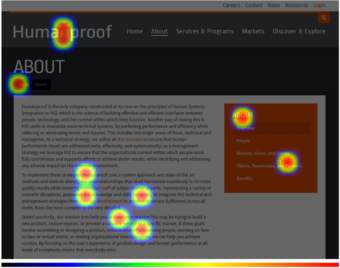
On websites, analysing clicks is really important for every click or any part that’s not being clicked gives actionable insights. Some websites have tracking tools or heat maps to detect which parts of the websites gets a lot of clicks and which parts don’t.

A heat map tool to analyse user behaviour

 By doing so, they’ll gain a deeper understanding on what to improve and on how to place different items on their website. This might actually help to deliver desirable actions from the customers and to drive better results.


 Checking Out

Every section of the website matters. It is important for the whole process of browsing or purchasing to be smooth. That being said, the checkout page must be very simple.

 Having a checkout page that demands a lot of things is likely to drive the prospects out of your website and perhaps, never on it ever again. (Remember the Amazon example?). A one-page checkout page is likely to enhance the customer’s experience and to increase the amount of sales.


CLV Boost

By delivering a convenient UX, it can certainly increase the customers’ loyalty and increase their purchases. This, in turn, will result in increasing the customers’ lifetime value (CLV).  The customers will be more likely to purchase more and thus, become of a higher worth for the company.  A convenient browsing and a checkout process might also increase the chances of impulse buying as well.


The Other View on UX

Although UX is still perceived by designers as something too technical which results in overlooking the humane aspect, it is essential to put the customers at the core of any UX design. After all, you wouldn’t want to design a perfect website for nobody to use or to benefit from. It is important to add a more “humane” perspective and approach to the process.


 Although there are plenty of additional factors which should be considered to enhance the overall UX, the ones mentioned would help give a head start.  

By offering the customers a consistent brand experience across various platforms, it might increase the chances of turning loyal customers into advocates who are willing to recommend your brand for others later on.

 At the end of the day, isn’t the ideal goal of digital platforms to transform loyalty into advocacy?