

It is commonly said that we mustn’t “judge a book by its cover,” but is that always the case? Unconsciously, most people seem to do the exact opposite. When thinking about a brand, most of us tend to visualise similar, if not identical, characteristics, so it is crucial that brands understand the importance of adjusting every touch-point, including the store design and atmosphere, to resonate with their brand’s core identity. In fact, in marketing, there’s a phrase that reflects “atmospherics as a marketing tool”, it was coined by Philip Kotler. He uses this phrase to describe the store’s atmosphere as the “conscious planning of the environment to create certain effects in buyers” (“Kotler”). He even depicts that, sometimes, the atmosphere is the primary product upon which the customers’ purchasing decisions is based on.
Kotler states the significance of the “total product” where he suggests that consumers respond not only to the tangible aspect of the product, but rather, to the product’s augmented aspects and features. He highly emphasises the impact of the place’s atmosphere on the buyer’s purchasing decision. (You can read more about it here). Although not all brands take this into consideration, yet there are many brands which incorporate their brand elements in the store’s design. If you’ve been to an IKEA store, you’ll certainly understand what I’m referring to.
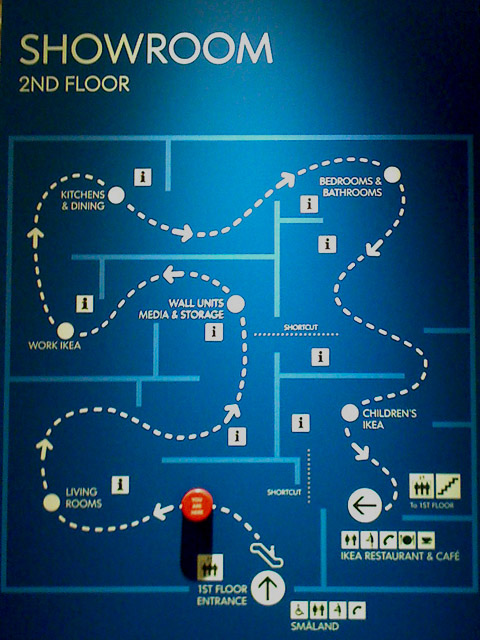
IKEA’s known for its convenient yet, visually appealing store design. Its furniture is demonstrated as if it were in its natural environment. IKEA’s stores are usually designed in a maze-like form where the products are strategically placed along the walking path. This actually allows the customers to view every item in the store unless they manage to take the shortcuts present at some points. This in-store strategy gives the customers a very pleasant experience in which they’ll later associate with the brand itself. It also encourages the customers to spend more time at the shop and to buy more items which they haven’t even thought about. On a further note, IKEA also manages to replicate its in-store style in its catalogue. IKEA’s catalogue presents the products in a similar manner as the in-store products’ placement. This extends the in-store experience and makes the whole concept of IKEA’s brand more concrete in the consumers’ minds.
Another store which succeeded in incorporating its brand elements in its store design and in building a gratifying atmosphere is Victoria’s Secret. Victoria’s Secret flagship stores could be directly noticed from miles away due to its signature and iconic look across all of the branches. Its signature black painted walls and dark lightning certainly create an inviting environment for all customers. Shopping through one of its stores certainly feels like an enjoyable experience with friendly customer service clerks who estimate appropriate sizes and carry a bag around for all your products. By having a person walk around with you whilst recommending products in a friendly manner, it is very likely to increase the number of purchases when done strategically. Also, the furnishing and dressing areas in its stores are consistent with the brand’s image as well. All of these factors resonate with the customers to create a pleasant shopping atmosphere which extends the brand’s identity.

It is extremely important that brands realise that consumers actually have a preconceived set of expectations upon walking into their store. The brand’s store experience must balance out their expectation or even exceed it. After all, that’s what quality is all about. Having an in-store atmosphere that resonates with the brand’s identity is very likely to satisfy the customers and to turn such touch-point into an opportunity to build familiarity and trust later on. The strategic design of a store could help affect the customer’s purchasing decisions. It can increase the opportunity of impulse buying and cross/up-selling opportunities.
The atmosphere of the store must embody the brand’s message and even extend it. When designing a store, brands could make use of several components to help communicate their identity. To start off, the brand’s colour palette should be present all through-out the store along with other visual elements such as the brightness, size, and different artefacts. Also, having salespeople whose personalities resonate with the brand’s archetype is also important. You can’t possibly imagine a non-tech savvy individual trying to sell you the newest IPhone for example.
Other factors that affect the store’s atmosphere might include the smell or even the temperature of the store. Children’s toy stores often include the smell of cotton candy or bubble gum which makes the in-store experience even more fun and pleasant. Such smells could serve as affect-creation tools which increase the brand’s associations and recall as well.
Brands must realise that their stores are an extension of their identity which tells a story about them. They must keep in mind what having a dull store means for making impact vs having a vibrant one. Customers might not remember your brand upon seeing it for the first time, but they’ll definitely remember how you made them feel at your store.
So the next time you visit a store, try to keep an eye out for the different brand’s elements present at the store for they might be affecting your purchasing decisions subconsciously.
 BBB- Buyer's Black Box